The Shein paradox: navigating the "anti-fast fashion" era in France

1. The €150 million lesson: why data compliance is a growth engine
On September 1, 2025, the CNIL (Commission Nationale de l'Informatique et des Libertés) sent shockwaves through the global e-commerce sector by fining Infinite Styles Services Co. Limited (Shein’s Irish subsidiary) €150 million ². The infraction was not a catastrophic data breach, but a failure to respect the user's right to control their data through non-compliant cookie practices.
The transparency trap
The CNIL found that Shein placed advertising cookies on user devices before they had even interacted with a consent banner. Furthermore, the "Refuse All" button was either technically ineffective or hidden behind "asymmetric" UX patterns that made it harder to reject tracking than to accept it ².
For an international marketer, the lesson here is structural. In the United States or the United Kingdom, data privacy is often handled as a legal check-box. In France, it is treated as a fundamental human right. The CNIL operates with a level of public support and technical agility that distinguishes it from its European peers:
- France vs. the United States: While the US relies on reactive "opt-out" models (like CCPA), the French market demands a proactive, frictionless "opt-in." If your French landing page uses dark patterns to hide the "Refuse" option, you aren't just risking a fine; you are signaling to the French buyer that your brand lacks professional ethics.
- France vs. the Netherlands: The Dutch authority (AP) tends to focus its firepower on systemic AI and big tech risks. The CNIL, however, is highly attentive to "mid-market" and high-traffic retail sites. If you have significant traffic in France, you are systematically audited.
2. Beyond the tax: the 2026 "anti-fast fashion" law
While your teams in Germany or the UK might be focusing on voluntary ESG (environmental, social, and governance) reporting, France has moved into active market intervention. In June 2025, the French Senate ratified a landmark bill targeting "ultra-fast fashion" players like Shein and Temu ⁵.
The cost of disposability (Eco-Tax)
Starting in 2025, a mandatory €5 eco-tax was applied to every item sold by companies classified as ultra-fast fashion (those releasing thousands of new references daily). By 2030, this tax will scale to €10 per item, capped at 50% of the retail price ⁴. For a brand built on €8 dresses, this is a total disruption of the business model.
The 2026 advertising blackout
The most significant shift for marketing managers is the advertising ban that came into force in January 2026. This prohibits ultra-fast fashion brands from using paid search, social media ads, and influencer partnerships in France ⁶.
This creates a split-screen reality:
- The United Kingdom: Influencer marketing remains the primary driver of fashion growth with minimal regulatory friction.
- France: Influencers now face administrative fines of up to €100,000 for promoting non-durable brands ⁶. Marketing managers must pivot away from "volume-based" influence toward "credibility-based" storytelling.
3. Mandatory Eco-Score: the new "label of truth"
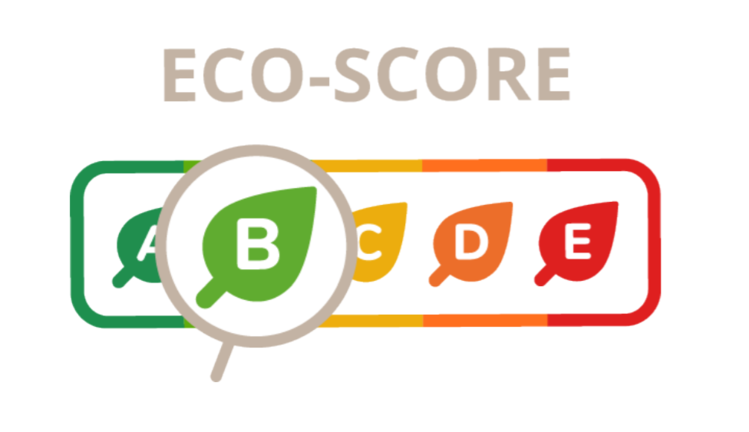
By October 2026, all clothing sold in France must display an Environmental Cost (commonly known as the Eco-Score) ⁷. This rating, derived from the "Ecobalyse" methodology, accounts for carbon emissions, water usage, and durability.
Strategic implications for 2026
- Display requirements: The Eco-Score must be at least as large as the price font on the digital sales platform ⁷.
- Third-party publication: From October 2026, if a brand fails to publish its own score, third parties (NGOs or even competitors) are legally allowed to calculate and publish a score for that brand using industry averages ⁸.
The "Durability Penalty": Brands with a wide range of references (high SKUs) are automatically penalized in the calculation, as the French government views range breadth as an incentive for overconsumption ⁷.

4. Decoding the French buyer: trust signals and cultural reflexes
A common strategic failure for foreign companies is the assumption that a Dutch or German "trust" model works in Paris. It does not. The French buyer is culturally conditioned to look for specific "reassurance markers."
The "Mentions Légales"
In the US or UK, the footer is a place for SEO links. In France, the Mentions Légales (legal notices) page is a primary conversion tool. B2B and savvy B2C buyers will check this page to find a physical address in the EU and a registered representative. If your company appears as a "ghost" with only a generic contact form, conversion rates will plummet.
Pricing transparency (TTC)
Unlike the United States, where sales tax is added at checkout, French law and consumer expectation demand TTC pricing (Toutes Taxes Comprises). Surprising a customer with VAT at the final checkout step is considered a deceptive practice and can trigger immediate complaints to the DGCCRF (the French consumer protection agency).
5. Strategic best practices for the "French Exception"
If you are a marketing leader scaling into France in 2026, these are your three strategic pillars:
Pillar 1: Radical UX transparency
Do not try to be "clever" with your cookie banner. Use the CNIL’s recommended "Accept All" and "Reject All" buttons with equal prominence. In the long run, the trust gained from a transparent UX leads to higher LTV (lifetime value) than the short-term gains of forced tracking.
Pillar 2: Localize the legal narrative
Ensure your Mentions Légales and CGV (Conditions Générales de Vente) are not just translated, but adapted to French consumer law. Use a local Data Protection Officer (DPO) contact point. This significantly lowers the "foreign company" suspicion that hinders conversion.
Pillar 3: Pivot to "Demonstration" over "Interruption"
With the advertising ban on ultra-fast models and the rise of the Eco-Score, marketing in France is moving from "interruption" (ads) to "demonstration" (proven durability). In 2026, a high Eco-Score is more valuable than a million-euro ad spend.
Conclusion: compliance as the ultimate competitive advantage
The story of Shein in France is not one of a brand being pushed out, but of a brand being forced to evolve. Despite the fines, Shein remains a powerhouse because it has begun integrating into the local ecosystem—opening permanent physical "shop-in-shops" in Paris to build local legitimacy.
For international marketing managers, the message is clear: France is not a market you can "hack." It is a market you must respect. By embracing the CNIL’s rigidity and the new environmental standards, you aren't just avoiding fines—you are building a brand that the French consumer can finally trust.
Sources
- Ecommerce News Europe - Shein unique monthly users in France (Sept 2025): https://ecommercenews.eu/15-million-new-european-shein-users/
- CNIL - Cookies placed without consent: Shein fined €150 million (Sept 2025): https://www.cnil.fr/en/cookies-placed-without-consent-shein-fined-150-million-euros-cnil
- EDPB - French SA: Sanction against Shein regarding Article 82 (Sept 2025): https://www.edpb.europa.eu/news/national-news/2025/french-sa-cookies-placed-without-consent-shein-fined-150-000-000-eur-cnil_en
- CarbonCredits - France's New Law to Curb Fast Fashion (June 2025): https://carboncredits.com/france-imposes-stricter-regulations-on-fast-fashion-industry-carbon-emission/
- Trimco Group - Anti-Fast Fashion Law in France: Game-changing Law (June 2025): https://www.trimco-group.com/newsroom/france-takes-on-fast-fashion-a-game-changing-law-for-the-industry-coming-soon
- ReedSmith - Luxury, Fashion, and the Law: France adopts fast fashion bill (Sept 2025): https://www.reedsmith.com/our-insights/blogs/viewpoints/102l69a/always-in-season-luxury-fashion-and-the-law-france-adopts-fast-fashion-bill/
- Carbonfact - The French Textile Eco-Score: 2025-2026 Key Updates: https://www.carbonfact.com/blog/policy/french-eco-score
- Waro - Textile environmental labelling (France): the complete guide 2025-2026: https://www.waro.io/en/blog/affichage-environnemental-textile-france-le-guide-complet-2025-2026
.svg)