Decoding the French GDP: a strategic growth guide for market entry

For international marketing leaders, the French economy is often a study in paradox. While headlines frequently focus on fiscal adjustments and political debates, the underlying Gross domestic product (Gdp) reveals a market of remarkable resilience and high-value consumer demand. In 2025, France's Gdp is projected to grow by approximately 0.7% to 0.9%, with an acceleration to 1.1% in 2026 ¹ ².
However, looking at the Gdp in isolation is a mistake. For a brand entering or scaling in France, these macro-indicators are a proxy for a unique "institutional and regulatory operating system." Unlike the United States or the United Kingdom, where growth is often driven by rapid cycles of consumption, the French economy is anchored in stability, long-term investment, and a "protectionist" trust model. To win in France, you must understand the strategic reality behind the numbers.
1. The Gdp of stability: why France works differently
The French economy is the third-largest in Europe and the seventh-largest globally. In 2026, it is expected to benefit from a "renewed investment cycle," particularly in sectors like aerospace, green energy, and Ai ⁵. For an international marketer, this stability offers a lower risk profile than more volatile markets, but it comes with a prerequisite: institutional reassurance.
The "savings paradox"
In 2025, the French savings rate remained one of the highest in the Western world. While the Gdp growth might seem modest compared to the United States (~2.5% in 2026), this is because French households are "cautiously wealthy." They have the purchasing power, but they require a higher level of trust to trigger a spending event.
- Strategic reality: You are not competing for "spare cash"; you are competing for "trusted allocation." In France, a brand must prove its longevity and respect for local standards before it can access this pool of savings.
2. Structural comparisons: France vs. your home market
Understanding where France sits relative to its neighbors is essential for adjusting your go-to-market expectations.

France vs. Germany
While Germany has struggled with stagnation in its manufacturing core, France has maintained a more diversified Gdp profile, buoyed by a strong services sector and public investment. However, while German buyers look for technical specifications, French buyers look for compliance as a marker of quality.
France vs. the United States and United Kingdom
In the US and UK, "frictionless" commerce is the goal. In France, "reassuring friction" is often a requirement. If your checkout process is too fast or lacks a detailed breakdown of Ttc (Toutes taxes comprises) pricing, a French buyer may perceive it as a lack of transparency. The Gdp is supported by a strong regulatory framework, and French buyers expect you to follow it.
3. Fiscal adjustment and the "compliance tax"
The French government is currently implementing a fiscal adjustment program to reduce the deficit to 4.9% of Gdp by 2026 ¹. For an international marketer, this has two direct consequences:
- Revenue-increasing measures: Expect higher scrutiny on corporate tax contributions for large digital enterprises.
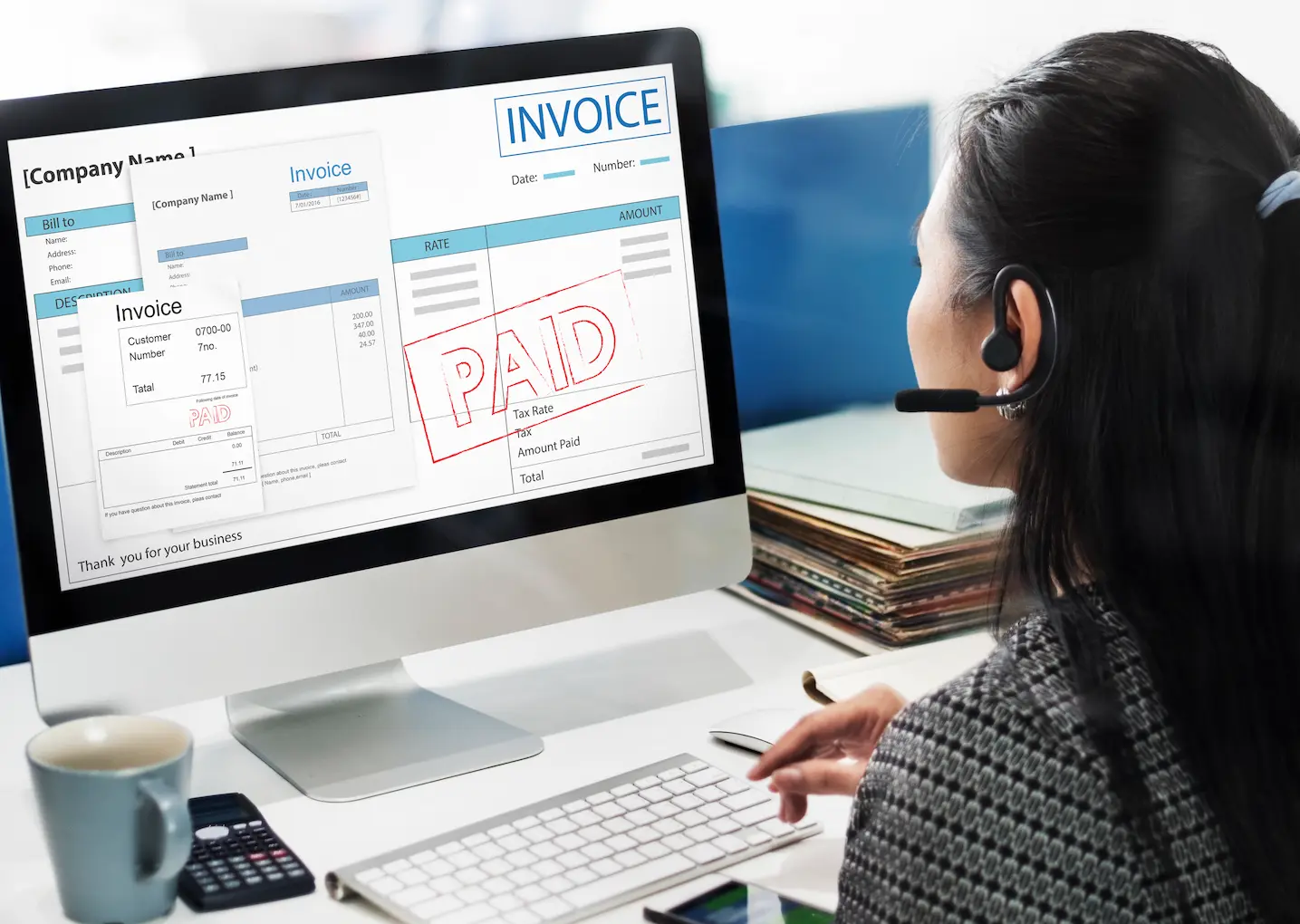
- The e-invoicing mandate: Starting in September 2026, France will enforce a mandatory b2b e-invoicing system ⁶.
Why this impacts marketing strategy
In the Netherlands or the UK, e-invoicing might be a back-office detail. In France, it is a "credibility marker." If your b2b service is not ready to integrate with the French e-invoicing ecosystem (Pdp or Chorus pro), you will be effectively locked out of large procurement contracts. In France, your "macro-compliance" is a key part of your value proposition.

4. Localisation beyond translation: the conversion drivers
A common mistake made by foreign firms is assuming that a well-translated website is enough to capture a share of the French Gdp. To the French buyer, "translated" often means "transient."
The "Mentions Légales" requirement
In France, the "Mentions légales" (Legal notices) page is a mandatory legal requirement. While it may seem like a boring detail to an American or British marketer, it is one of the most visited pages for a French buyer. They use it to verify that the company has a physical presence and a registered representative.
- Pro-tip: Listing a French or Eu-based address in your footer drastically increases your "local trust score."
Pricing transparency and the tax reflex
The French consumer has a high "tax reflex." All prices must be displayed Ttc. If a customer reaches the final step of a purchase and sees a "Vat" or "processing fee" surprise, it is viewed as a deceptive practice. This lack of transparency is the number one cause of cart abandonment in France.
5. Best practices for scaling in the Hexagon
To effectively capture growth in France's stable economic environment, follow these three strategic pillars:
- Pivot to "Professional Reassurance": Use your marketing assets to highlight your compliance with French standards (Cnil, Agec law, etc.). In France, "being a good corporate citizen" is a high-performing marketing message.
- Invest in a "French-Speaking" Sav: French buyers have a low tolerance for bot-only support in English. Even if your product is world-class, a lack of French-speaking Sav (Service après-vente) signals that you are not committed to the market.
- Adopt the "Vous" Economy: In the Netherlands or US, "friendly/casual" is the norm. In France, professionalism starts with formal greetings. Using "Tu" in a b2b context or an informal tone in high-end b2c can be interpreted as a lack of respect or technical depth.
Conclusion: the "French Exception" as an opportunity
The French Gdp story in 2026 is one of "stable complexity." It is a market that rewards those who take the time to integrate into its institutional fabric. By moving away from "global-standard" templates and embracing the specific regulatory and cultural markers that French buyers demand, you can unlock a level of loyalty and lifetime value that is rare in more volatile economies. In France, trust is not just a feeling; it is an economic asset.
Sources
- European Commission - Economic forecast for France (November 2025): https://economy-finance.ec.europa.eu/economic-surveillance-eu-member-states/country-pages/france/economic-forecast-france_en
- Banque de France - Macroeconomic projections (December 2025): https://www.banque-france.fr/en/publications-and-statistics/publications/macroeconomic-projections-december-2025
- House of Commons Library - GDP international comparisons (January 2026): https://commonslibrary.parliament.uk/research-briefings/sn02784/
- Allianz - Economic outlook 2026-27: Stretching the limits (December 2025): https://www.allianz.com/en/economic_research/insights/publications/specials_fmo/251217-economic-outlook-2026-27.html
- Allianz Trade - France Country Risk Report (October 2025): https://www.allianz-trade.com/en_global/economic-research/country-reports/France.html
- Entreprendre.service-public.fr - Electronic invoicing mandate 2026: https://entreprendre.service-public.gouv.fr/actualites/A15683?lang=en
.svg)